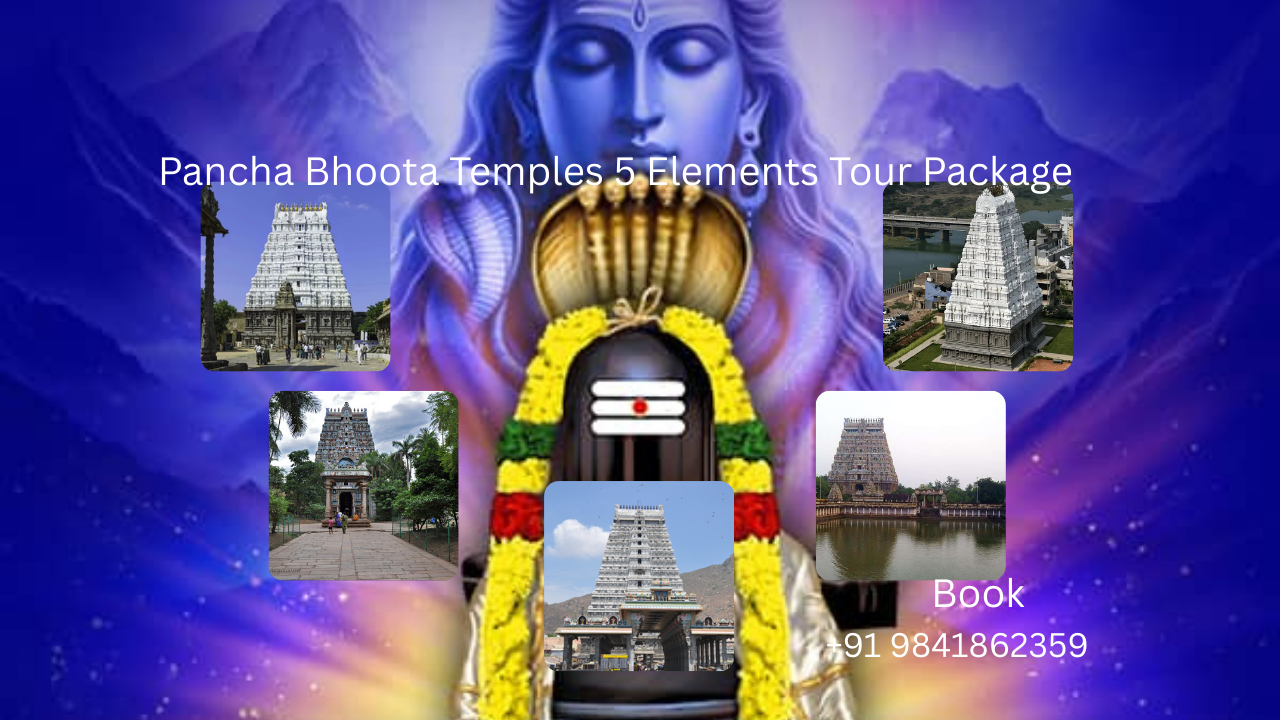
A Complete Guide to the Temples of the 5 Elements
Exploring the Temples of Five Elements pulls you into China’s ancient power spots. Wood temple grows with life. Fire blazes energy. Earth stands firm. Metal cuts sharp. Water runs deep.
When Stone Becomes Scripture
If you’ve ever stood in a quiet forest, felt the mist rise off a river, watched a sunrise set a mountain ablaze, inhaled the crisp breath of a high‑altitude plateau, or marveled at the endless night sky, you’ve sensed the five primordial forces that ancient Indian philosophy calls Pancha Bhoota – Earth (Prithvi), Water (Ap), Fire (Agni), Air (Vayu), and Ether/Space (Akasha).
These elements are more than just scientific categories; they’re living energies that shape the cosmos and the human experience. In the southern state of Tamil Nadu, a series of five Shiva temples—collectively known as the Pancha Bhoota Sthalams—embody each element in stone, water, fire, wind, and light. Pilgrims, architects, and travelers alike have been drawn to these sites for centuries, seeking both spiritual insight and aesthetic wonder.
In this post, we’ll take a virtual journey through each of the five temples, unravelling the myths that birthed them, the architectural marvels that preserve those myths, and the practical tips you’ll need to experience the elemental pilgrimage for yourself.
1. Earth – Ekambareswarar Temple, Kanchipuram
The Legend
According to legend, the sage Parashurama once pleaded with Shiva for a permanent abode on Earth. In response, Shiva manifested as a lingam of sand beneath a massive mango tree—hence the name Ekambareswarar (“Lord of the Mango Tree”). The deity promised that anyone who worshipped here would receive the stability and fertility that the earth itself provides.
Architectural Highlights
- Gopuram (Gateway Tower): The 192‑foot, 12‑tiered gopuram, painted in vibrant reds and golds, dominates the skyline and serves as a symbolic “root” rising from the ground.
- Mango Tree: A centuries‑old Madhuca longifolia still stands in the inner courtyard, a living reminder of the temple’s origin story.
- Hall of Pillars: Over 80 intricately carved pillars showcase scenes of the Ramayana and local legends, each seemingly “grounded” in the earth with massive, squat bases.
What to Experience
- Earthing Ritual: Join the early‑morning pradakshina (circumambulation) barefoot on the granite floor. The cool stone is said to “ground” both body and mind.
- Local Flavors: Grab a bowl of Kanchipuram idli (steamed rice cakes) from a nearby stall; the dish’s soft texture mirrors the temple’s earthy ambiance.
Travel Tip
- Best Time to Visit: November–February, when the climate is cool and the temple garden is in full bloom.
2. Water – Jambukeswarar Temple, Thiruvanaikaval (Trichy)
The Legend
The story goes that the celestial river Ganga once descended to Earth in the form of a waterfall to worship Shiva. The deity appeared as a lingam that constantly drips water, underscoring the perpetual flow of life. The word Jambu refers to the glossy jamun tree that stands near the sanctum, whose roots draw water from the underground stream.
Architectural Highlights
- Perennial Water Flow: A natural spring runs behind the main sanctum. A silver stream constantly drips onto the lingam, audible throughout the inner hall.
- Four‑Sided Sanctum: The garbhagriha (inner sanctum) has four doors, each opening to a different element; the western door faces water and is always kept slightly ajar to allow the sound of water to echo.
- Temple Tank (Theertham): The massive Rajarajeswaram tank is used for ritual bathing; its surface reflects the surrounding temples like a liquid mirror.
What to Experience
- Ritual Bath: Participate in the Abhishekam (ritual bathing of the lingam) – the priests pour water from copper vessels, and you can feel the cool droplets on your skin.
- Evening Aarti: As the sun sets, the temple lights shimmer on the water, creating a magical, almost ethereal glow.
Travel Tip
- Carry a Light Raincoat: The constant drizzle inside the sanctum can make you damp, especially during monsoon season (June–September). A light, quick‑dry raincoat will keep you comfortable.
3. Fire – Annamalaiyar Temple, Thiruvannamalai
The Legend
Long ago, Lord Shiva manifested as a column of fire (the Jyotirlinga) to test the devotion of the gods. He promised to burn away all impurities for those who circumambulated his mountain 12 times. The hill Annamalai itself is revered as the fire embodiment, and the temple sits at its base.
Architectural Highlights
- Gopurams and Mandapas: The temple complex boasts 13 gopurams with intricate stonework, culminating in a towering 100‑foot pinnacle that seems to pierce the sky—symbolic of fire’s upward thrust.
- Karthika Deepam Festival: Each December, a massive beacon (the Karthika Deepam) is lit atop the hill, visible from miles away.
- Stone Carvings: Depictions of the Vedas and cosmic dance (Ananda Tandava) are etched into the fire‑colored sandstone, giving the feeling of being surrounded by ember‑like patterns.
What to Experience
- Girivalam (Hill Circumambulation): Walk the 14‑km path around the hill—especially powerful during full moons. Many pilgrims carry a small lamp to symbolize inner fire.
- Taste the “Fire” Food: Try the thick, spicy rasam offered in the temple’s cafeteria; it’s said to awaken the digestive fire (Agni).
Travel Tip
- Early Morning or Late Evening: The hill can be scorching in the midday sun. Opt for a dawn or dusk trek to avoid heat and witness the spectacular sunrise/sunset over the hill.
4. Air (Wind) – Srikalahasti Temple, Andhra Pradesh
The Legend
Legend tells that Sage Bhrigu once asked Shiva to reveal the ultimate truth. Shiva responded by releasing a gust of wind that carried the sage’s thoughts to the heavens. The wind god Vayu became the temple’s guardian, and a Vayudeva (wind deity) shrine sits right next to the main sanctum.
Architectural Highlights
- Wind‑Powered Bell: A bronze bell installed in the main hall rings whenever a breeze passes; its sound is said to cleanse the mind.
- Four‑Story Gopuram: The towering gopuram is perforated with lattice windows that let air swirl through, creating a natural ventilation system that has stood for centuries.
- Ritual of Pradakshina With a Fan: Devotees swirl hand‑held fans while circumambulating, symbolically honoring the element of air.
What to Experience
- Anjaneya (Hanuman) Flight: During Uttara Dhanur (the “wind festival”), a troupe performs aerial dances that mimic the motion of wind currents.
- Ayurvedic Breathwork: Local ashrams offer pranayama sessions on the temple steps, letting you inhale the fresh, fragrant air scented with sandalwood and jasmine.
Travel Tip
- Bring a Light Scarf: The temple’s open architecture can cause sudden gusts, especially during the monsoon; a scarf keeps your hair and face comfortable.
5. Ether/Space – Thillai Nataraja Temple, Chidambaram
The Legend
In the cosmic dance of Nataraja, Shiva’s form transcends all physical elements, representing the infinite Akasha (ether). The temple’s sanctum houses the golden Nataraja idol, poised amidst a chandra (moon) and surya (sun), signifying the void that contains all.
Architectural Highlights
- The “Chidambaram Rahasyam” (Secret of Space): The inner sanctum’s roof is open to the sky, allowing the celestial sphere to become part of the worship space. Sunlight streams in, creating a cosmic interplay of light and shadow.
- Koothambalam (Performance Hall): A 100‑year‑old wooden stage where sacred Bharatanatyam performances reenact the mythic dance, turning the space into a living narrative.
- Thillai Forest Motif: Intricate stone work depicts the ancient Thillai forest, symbolizing the boundless, unseen ether that surrounds us.
What to Experience
- Night Aarti Under the Stars: On full moon nights, the sanctum’s open roof creates a dramatic silhouette of the Nataraja, as worshippers chant under the starlit sky.
- Silence Meditation: Sit in the Ratna‑Bhoomi (the jewel‑filled courtyard) where the acoustic design channels natural silence—a perfect setting for a brief meditation on the concept of emptiness.
Travel Tip
- Book a Guided Night Tour: The temple’s night rituals are a rare spectacle. Guided tours usually start at 7 pm and include a brief lecture on the symbolism of Ether.
Crafting Your Elemental Pilgrimage – Practical Itinerary from Chennai
Tour Itinerary:
Day 1:- Chennai to Chidambaram-Tiruvanai Koil-Tiruvannamalai
Today Early Morning 5.00 AM Chennai Pickup to Chidambaram, Reach at Chidambaram darshan to Pancha Bhoota Sthalam Of Thillai Natarajar temple- Agaya Lingam (Space) after darshan Start Your Journey Tiruvanai Koil, Reach at Tiruvanai Koil Evening after 4.00 PM Darshan to Pancha boota Sthalam Of Tiruvanai koil Jambukeswarar temple Appu Lingam (Water) after Darshan Proceed to Overnight Tiruvannamalai Hotel Transfer.- Night Stay at Tiruvannamalai
Day 2:- Tiruvannamalai to Kanchipuram
Today Morning Check Our from the hotel Start to drive darshan to Tiruvannamalai Arunachaleeswarar temple one of The Pancha Bhoota Sthalam Of Jothi Lingam (Fire) after darshan Start to drive Kanchipuram, Reach at kanchipuram Check in to hotel Fresh up after Fresh up Evening kanchipuram Shopping after Shopping Back to hotel.- Night Stay at Kanchipuram
Day 3:- kanchipuram to Kalahasti Drop
Today Morning Check out from the hotel Start to drive darshan to kanchipuram Pancha Bhoota Sthalam of Ekambareswarar temple Prithvi Lingam-Earth (land) after Darshan Proceed to Kalahasti Drop
Packing Essentials
- Air Condition Car
- Budget Or Standard Hotel AC Accommodation
Cultural Etiquette
- Remove shoes before entering any sanctum.
- Don’t photograph the inner lingam unless explicitly allowed.
- Offer a modest donation (₹50–₹200) to support temple maintenance.
- Respect local customs—no loud conversations during rituals.
Famous Pancha Bhoota Temples Tour Packages
- 2 Nights 3 Days Pancha Bhoota Sthalam Tour Chennai – View Price
- 3 Nights 4 Days Pancha Bhoota Temples Tour Package from Chennai – View Price
- 4 Nights 5 Days Pancha Bhoota Elements Tour Package Chennai
Why the Five Temples Matter Today
In a world swamped by digital noise and climate anxiety, the Pancha Bhoota Sthalams offer a tangible reminder that nature’s forces are sacred, interdependent, and accessible. Walking through a stone hall drenched in water or feeling the wind sweep through a centuries‑old gopuram can restore a sense of balance that modern life often erodes.
Moreover, these temples are living classrooms for architecture, mythology, ecology, and psychology. They illustrate how ancient builders used sustainable design—natural ventilation, rainwater harvesting, solar orientation—to honor the very elements they revered.
Final Thoughts – Carry the Elements Within You
Visiting the five elemental temples isn’t just a checklist for a travel blog; it’s an invitation to reconnect with the primal energies that shape our bodies, emotions, and surroundings. When you stand under the open sky at Chidambaram, feel the cool drip of water at Jambukeswarar, or inhale the fragrant breeze at Srikalahasti, you’re not just observing a ritual—you’re participating in a lineage that stretches back millennia.
So pack your bags, tie your sandal straps, and set out on this pilgrimage. Let the Earth ground you, the Water cleanse you, the Fire ignite your purpose, the Air lift your spirit, and the Ether expand your consciousness. The journey of the five elements is, ultimately, a journey back to your own inner universe.
Safe travels, and may the five elements guide your path. 🌏💧🔥🌬️✨