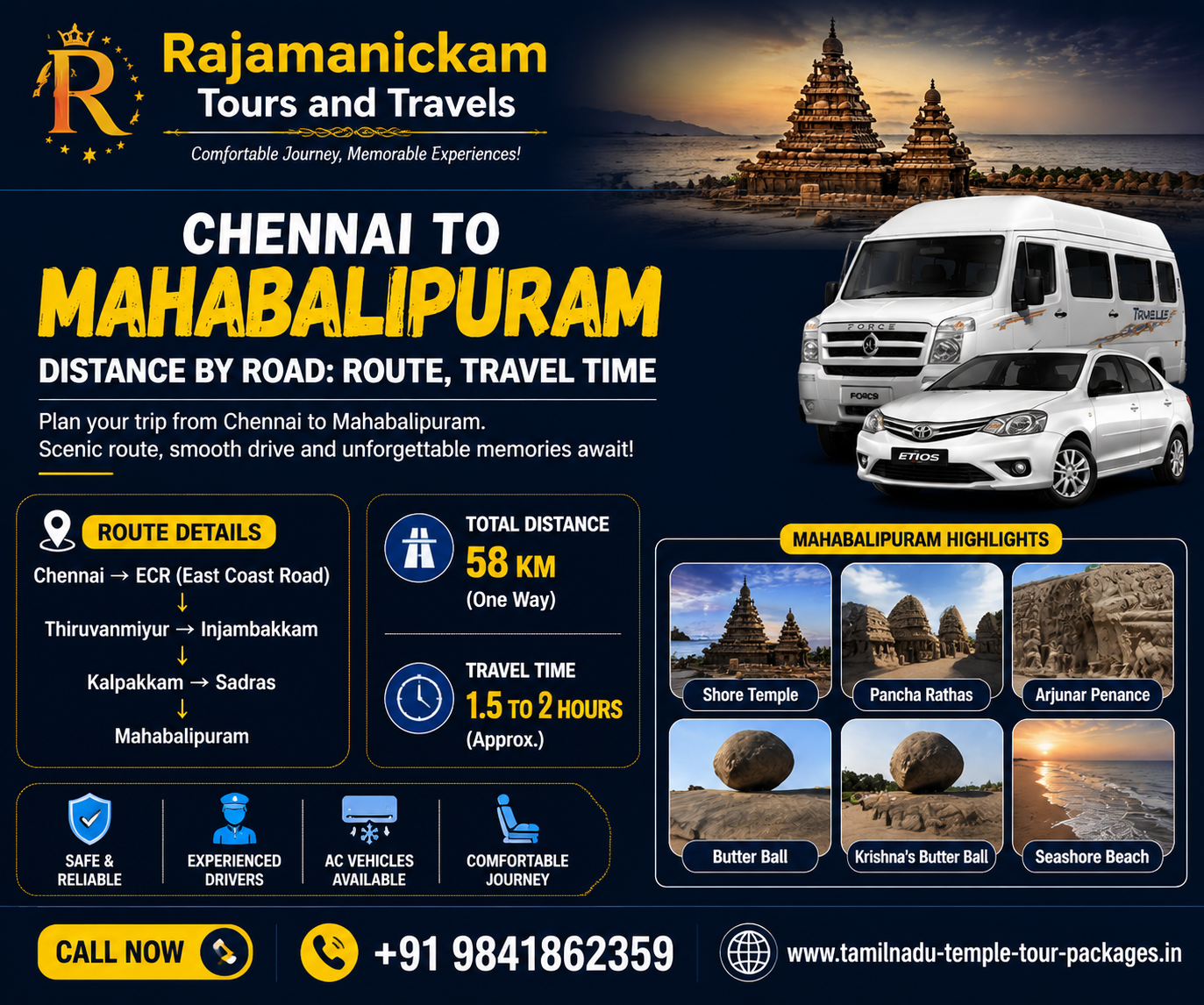
Chennai to Mahabalipuram Distance by Road: Route, Travel Time & Complete Travel Guide
Mahabalipuram, also known as Mamallapuram, is one of Tamil Nadu’s most popular tourist destinations and a UNESCO World Heritage Site. Famous for its ancient rock-cut temples, Shore Temple, Pancha Rathas, and beautiful beaches, Mahabalipuram attracts thousands of visitors every year.
If you’re planning a road trip from Chennai, knowing the Chennai to Mahabalipuram distance, travel time, route options, and sightseeing places can help you enjoy a hassle-free journey. Whether you’re traveling with family, friends, or colleagues, this guide covers everything you need to know.
Chennai to Mahabalipuram Distance
The approximate distance from Chennai to Mahabalipuram is:
| Route | Distance | Travel Time |
|---|---|---|
| Via East Coast Road (ECR) | 58 km | 1 Hour 30 Minutes |
| Via Old Mahabalipuram Road (OMR) | 60 km | 1 Hour 45 Minutes |
The East Coast Road (ECR) is the most preferred route because of its scenic coastal views, smooth roads, and tourist attractions along the way.
Best Route from Chennai to Mahabalipuram
Route 1: Chennai → ECR → Mahabalipuram (Recommended)
This is the most popular route for tourists.
Highlights
- Beautiful Bay of Bengal coastline
- Well-maintained four-lane highway
- Plenty of restaurants and cafés
- Ideal for family road trips
- Multiple sightseeing attractions on the way
Places to Visit Along ECR
- DakshinaChitra Heritage Museum
- Muttukadu Boat House
- Kovalam Beach
- Madras Crocodile Bank Trust
- Tiger Cave
This route offers an enjoyable drive and several opportunities to stop for photos and sightseeing.
Alternative Route via OMR
The Old Mahabalipuram Road (Rajiv Gandhi Salai) is another option. It passes through Chennai’s IT corridor and is suitable for those starting from South or West Chennai.
Although the distance is similar, traffic during office hours may increase travel time.
Travel Time from Chennai to Mahabalipuram
Travel time depends on the route, traffic conditions, and the day of the week.
- Early Morning: 1 hour 15 minutes to 1 hour 30 minutes
- Weekdays: 1 hour 30 minutes to 2 hours
- Weekends & Holidays: Up to 2 hours due to tourist traffic
Starting your trip before 7:00 AM helps avoid congestion and gives you more time to explore.
Best Time to Visit Mahabalipuram
The ideal months to visit are:
- October to March – Pleasant weather and perfect for sightseeing
- July to September – Green surroundings after the monsoon
- April to June – Hot afternoons; early morning visits are recommended
Top Attractions in Mahabalipuram
Mahabalipuram is home to some of India’s finest ancient monuments.
Shore Temple
One of the oldest structural stone temples in South India and a UNESCO World Heritage Site overlooking the Bay of Bengal.
Pancha Rathas
Five monolithic temples carved from single granite rocks, showcasing remarkable Pallava architecture.
Arjuna’s Penance
A massive open-air rock relief depicting scenes from Hindu mythology.
Krishna’s Butter Ball
A gigantic balancing boulder that has fascinated visitors for centuries.
Mahabalipuram Lighthouse
Climb to the top for panoramic views of the coastline and the historic town.
Tiger Cave
Located a few kilometers north of Mahabalipuram, this rock-cut monument is a peaceful stop for visitors.
Seashell Museum
A family-friendly attraction displaying one of India’s largest collections of seashells and marine artifacts.
One Day Chennai to Mahabalipuram Itinerary
| Time | Activity |
|---|---|
| 7:00 AM | Pickup from Chennai |
| 8:00 AM | DakshinaChitra Heritage Museum |
| 9:00 AM | Muttukadu Boat House |
| 10:00 AM | Kovalam Beach |
| 10:30 AM | Madras Crocodile Bank |
| 12:00 PM | Lunch Break |
| 1:30 PM | Shore Temple |
| 2:30 PM | Pancha Rathas |
| 3:30 PM | Arjuna’s Penance |
| 4:00 PM | Krishna’s Butter Ball |
| 5:00 PM | Lighthouse & Shopping |
| 6:00 PM | Return to Chennai |
| 7:30 PM | Drop-off in Chennai |
Why Travel by Road?
A road trip from Chennai to Mahabalipuram offers flexibility and convenience.
Benefits include:
- Comfortable door-to-door travel
- Scenic coastal drive
- Freedom to stop at attractions
- Ideal for families and groups
- Easy access to restaurants and beaches
- Perfect for photography enthusiasts
Vehicle Options for Your Trip
Rajamanickam Tours and Travels offers a wide range of vehicles to suit every travel need:
- Swift Dzire
- Toyota Etios
- Ertiga
- Toyota Innova
- Innova Crysta
- 12 Seater Tempo Traveller
- 14 Seater Tempo Traveller
- 18 Seater Tempo Traveller
- Force Urbania
- 20 & 22 Seater Minibus
- 30, 35, 40 & 45 Seater Luxury Buses
All vehicles are air-conditioned, clean, and driven by experienced chauffeurs.
Travel Tips
- Start your journey early to avoid traffic.
- Carry drinking water, sunglasses, and sunscreen.
- Wear comfortable footwear for walking around monuments.
- Keep your camera or smartphone ready for scenic coastal views.
- Respect heritage monuments by following local guidelines.
- Book your vehicle in advance during weekends and holiday seasons.
Why Choose Rajamanickam Tours and Travels?
We specialize in one-day and multi-day tours across Tamil Nadu with reliable transportation and professional service.
Why travel with us?
- Home, hotel, airport, and railway station pickup
- Well-maintained AC vehicles
- Experienced drivers familiar with tourist routes
- Affordable packages for individuals and groups
- Flexible sightseeing itinerary
- Safe, comfortable, and punctual service
Frequently Asked Questions
What is the distance from Chennai to Mahabalipuram?
The distance is approximately 58 km via East Coast Road (ECR) and around 60 km via Old Mahabalipuram Road (OMR).
Which route is best?
The East Coast Road (ECR) is the preferred route because of its scenic views, smooth drive, and attractions along the way.
How long does it take to reach Mahabalipuram?
Travel time is typically 1 hour 30 minutes, depending on traffic conditions.
Is Mahabalipuram suitable for a one-day trip?
Yes. Mahabalipuram is one of the best one-day destinations from Chennai and can easily be explored in a full-day itinerary.
What is the best time to visit?
The best season is October to March, when the weather is pleasant for sightseeing.
Book Your Chennai to Mahabalipuram Tour Today
A road trip from Chennai to Mahabalipuram is the perfect combination of history, culture, coastal beauty, and relaxation. Whether you’re planning a family outing, a friends’ getaway, or a corporate excursion, Rajamanickam Tours and Travels offers comfortable vehicles and customized tour packages to make your journey memorable.
Contact Us
Rajamanickam Tours and Travels
📞 Call / WhatsApp: +91 9841862359
🌐 Website: www.tamilnadu-temple-tour-packages.in
Book your Chennai to Mahabalipuram road trip today and experience one of South India’s most iconic heritage destinations in comfort and style.